

De Ja Vue
As I posted in my blog about the 25th anniversary of 9/11, one of eeriest moments was the three to four days where all air traffic in the U.S. was grounded. Here we are today and we are facing a similar situation where all air traffic in the U.S. is grounded. For how long we do not know. Preliminary reports are that this is not a terrorist attack.
Per the NY Times: The Federal Aviation Administration announced a rare nationwide ground stop on Friday afternoon, halting nearly all departures and stranding thousands of passengers in what appeared to be a major outage affecting its air traffic control system.
Markwayne Mullin, the secretary of homeland security, blamed the ground stop on what he said was a telecommunication outage but said Trump administration officials did not know the cause, adding that it would take an extended period of time to fix the issues.
He emphasized that it was not a terrorist attack. “This isn’t another 9/11.”
Multiple U.S. officials said there were no signs that the outage was due to a malicious cyber incident or other nefarious activity. All cautioned that their understanding of the situation could change.
“FAA technicians are investigating the issue,” he added. “We will provide immediate updates as we have them.”
Shortly after the advisory was posted, an F.A.A. website that lists air traffic control system notices appeared to have gone down, erasing dozens of notices that previously had been listed.
More than 2 million people pass through airport security checkpoints on a typical day, according to Transportation Security Administration data. On Thursday, the agency screened nearly 2.5 million people. Amid delays and cancellations on Friday evening, many passengers were taken off flights or told to go home. According to FlightRadar24, an aviation tracking site, there were more than 1,000 airborne aircraft bound for U.S. airports during the nationwide ground stop. According to the flight tracking app Flighty, there were more than 30,000 departures and arrivals scheduled for the remainder of the day.
At least some of the airborne flights appeared to be landing amid the stoppage. About half an hour after the ground stop was declared, planes could be seen landing at O’Hare International Airport.
But passengers waiting to take off were stuck in limbo.
*****************************************************************************************************
Part One: Understanding the Numbers Before Reporting Them
Earlier this week, I came across a statistic that immediately made me stop and think. Heather Cox Richardson, in her newsletter Letters from an American, cited a report by CNBC’s Carl Quintanilla indicating that an analysis by Schwab indicated consumer prices had increased 12% during the previous year. That didn’t seem consistent with the inflation figures I had been seeing elsewhere, so I decided to investigate.
I began with a question to ChatGPT: Was the 12% figure accurate?
The answer: It depends.
Schwab had apparently reported that when four categories (utilities, gasoline, groceries, and electricity) of household expenses were averaged, the resulting increase was approximately 12%.
Based on my understanding of how the CPI is calculate, it immediately raised another question. Electricity although reported separately by Schwab is generally included within the broader utilities category used by the Bureau of Labor Statistics, which Schwab listed as one of its four categories. This implies that there might be a double count of Electricity in Schwab’s numbers, however, I have a hard time believing Carl Quintanilla and Schwab would make a simple mistake like that. I also knew that government also tracks natural gas separately. So, if natural gas was what Schwab intended when referencing utilities, then there would be no double-counting.
The problem was that I could not find enough information to determine precisely how the calculation had been performed.
That raised a broader concern. How could a statistic from a respected financial institution (Schwab) be repeated by a prominent journalist (Quintanilla) and then appear in a widely read newsletter (Richardson) without readers being given enough information to fully understand what the number represented?
To be fair, Carl Quintanilla’s original post identified the categories being averaged. But Richardson’s summary could easily leave readers with the impression that overall consumer prices had increased 12%, which is not true.
I am not suggesting that anyone deliberately misrepresented the information. Instead, I wonder whether the statistic received less scrutiny because it appeared consistent with concerns many people already had about the economy. So, when a number seems to confirm something we already believe, it becomes much easier to accept it without asking additional questions.
We see this problem every day. A statistic can be mathematically correct and still create a misleading impression when presented without the proper explanation. Politicians, journalists, commentators, bloggers, and social media users repeat statistics to support arguments about the economy, immigration, crime, education, and virtually every other issue facing our country.
I recognize that I am just as susceptible as anyone else to accepting information that supports something I already believe. In fact, that may be one reason I found this exercise so valuable. It reminded me that skepticism should apply equally to statistics that support my views and those that challenge them. The responsibility to get the facts right should not depend on whether those facts support our political beliefs.
********************************************************************************************************
Part Two: The 12% Figure Still Tells Us Something Important
Having questioned how the 12% statistic was presented, I decided to look more closely at the actual numbers.
Although the 12% should not be confused with the overall inflation rate, it does draw attention to some significant increases in expenses American families face every day.
According to the Bureau of Labor Statistics, consumer prices increased 3.7% during the 12 months ending in September 2026. However, several essential household expenses increased at very different rates. Gasoline prices increased 34.2%, natural gas 5%, electricity 4.4%, and groceries 1.8%., which averages just less than 12%.
That does not mean the average family’s expenses increased 12%. Families spend different amounts on gasoline, utilities, and groceries. In addition, the government’s overall inflation rate of 3.7% accounts for a much broader range of household purchases.
Nevertheless, the numbers tell an important story.
A retiree living on a fixed income, a family commuting long distances to work, or a parent filling a gas tank several times each week may experience inflation very differently than someone whose spending patterns are less affected by those categories. For someone who drives a considerable distance to work every day, a 34% increase in gasoline prices can have a significant impact on the family budget. Rising utility bills place additional pressure on households, particularly retirees and others living on fixed incomes.
This is why I believe we need to distinguish between what economists tell us about inflation and what individual families experience when paying their bills.
Both perspectives matter.
Two Lessons from One Statistic
I began this investigation wondering whether a widely circulated 12% inflation figure was accurate.
I ended up with two conclusions.
First, we need to be more careful about how we use statistics. Journalists, politicians, financial analysts, bloggers, and the rest of us have a responsibility to understand the numbers before presenting them as facts. That responsibility becomes especially important when a statistic supports an argument, we are already inclined to believe.
Second, questioning how a statistic is presented should not cause us to ignore the legitimate concern behind it. Rising prices for gasoline, utilities, and groceries have real consequences for American families, regardless of which political party occupies the White House.
We should be able to acknowledge both the accuracy of the overall inflation statistics and the financial pressures facing families.
Getting the numbers right and recognizing the problems they reveal are not competing objectives. Both are necessary if we want an informed discussion about the challenges facing our country.
Perhaps the most important lesson from this entire exercise has nothing to do with inflation. It is that statistics seldom speak for themselves. They require context, explanation, and careful analysis.
The next time we encounter a number that appears to prove something we already believe, we should ask ourselves a simple question: Do I understand what this number measures, or do I just like the story it tells?
*************************************************************************************************************
Quote of the Day
“Everyone is entitled to his own opinion, but not to his own facts.”
— Daniel Patrick Moynihan
Orchid of the Day
Today’s Orchid goes to the journalists, researchers, economists, and fact-checkers who take the time to examine the numbers behind the headlines, even when the results challenge their own assumptions and beliefs.
Onion of the Day
Today’s Onion goes to those who repeat statistics without understanding what they measure, particularly when the numbers support a political argument, they are eager to make. That criticism applies equally to politicians, media organizations, commentators, and ordinary citizens. Accuracy should matter more than whether a statistic helps our side win an argument.
Question of the Day
Based on all flights being grounded today, what will it take for you to get back into a plane.
Lyrics of the Day
All my bags are packed I’m ready to go
I’m standin’ here outside your door.
If you know the answer, use the comment section of the blog to let me know your answer.
Answer to Wednesday’s lyrics of the day: No Thanks Needed-by Seth Baker
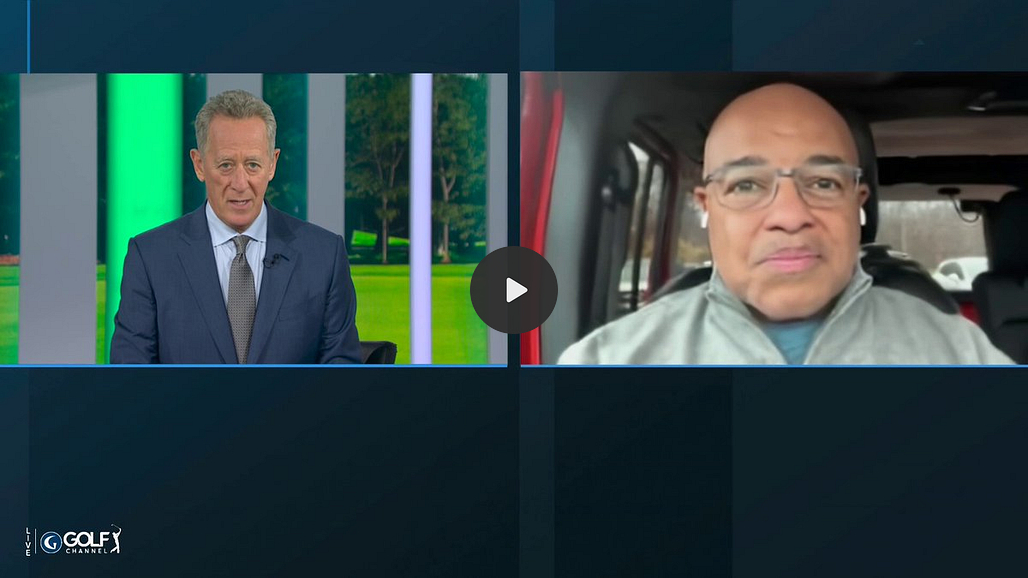
Video of the Day: Mike Tirico tribute to NBC’s Dan Hicks who died on Wednesday.

Leaving on a jet plane
But not yesterday
yes many people are singing John Denver today. Numerous college football teams will not make their away. Washington Huskies took their bags back to the dorms while Mich State wonders when or if they play